
Fire Safety Engineering
Fundamentally, I use computational methods to study problems of interest in engineering. I have focused on applications involving fire hazards because the problems are interesting and the scientific community is small but vibrant. While much of my prior work focused on building fires, I have shifted my focus recently toward fires at the wildland-urban interface. Watch the video below about how structures ignite due to wildfire.
I am a structural engineer by training and a self-taught fire scientist. Given my background, I was able to make significant advances in the formulation of new finite elements to simulate the 3D thermal response of beams, plates, and shells for fire safety engineering applications, and coupled them to a high-fidelity computational fluid dynamics (CFD) model to study structural response under non-uniform heating. More recently, I have moved into the wildfire space, as discussed below.
Wildland-Urban Interface Fires
The goal of my research is to increase the resilience of communities at the wildland-urban interface (WUI) by using state-of-the-art computational modeling to identify the potential for structural ignition caused by a combination of firebrand showers and convection/radiation from wildfires so that communities living at the WUI can make informed decisions about where to invest in structural upgrades. My team has proposed a two-pronged approach that involves (1) high-fidelity modeling of firebrands impinging on structures using the discrete element method (DEM) coupled with CFD and (2) low-fidelity modeling of transport of firebrands flowing in communities using an Eulerian multiphase (EM) model in CFD. We have also been gathering and analyzing video data from the 2025 Los Angeles fires to understand the exposure of structures to ember showers.
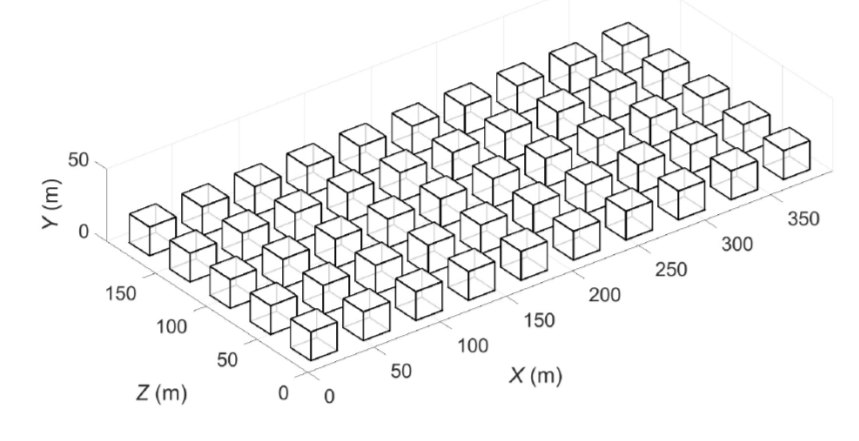
The CFD-DEM model shown below offers significant improvements over existing models for firebrand transport because it models the bouncing, rolling, and deposition of firebrands on a domain that includes structural barriers. We have explored the use of superquadric elements to model the transport of cylindrical and disk-shaped firebrands, and we are now introducing clumps to simulate the 3D transport and heat transfer of cylindrical firebrands in contact with one another. We are also currently validating our heat and mass transfer models against experiments for burning piles of firebrands.
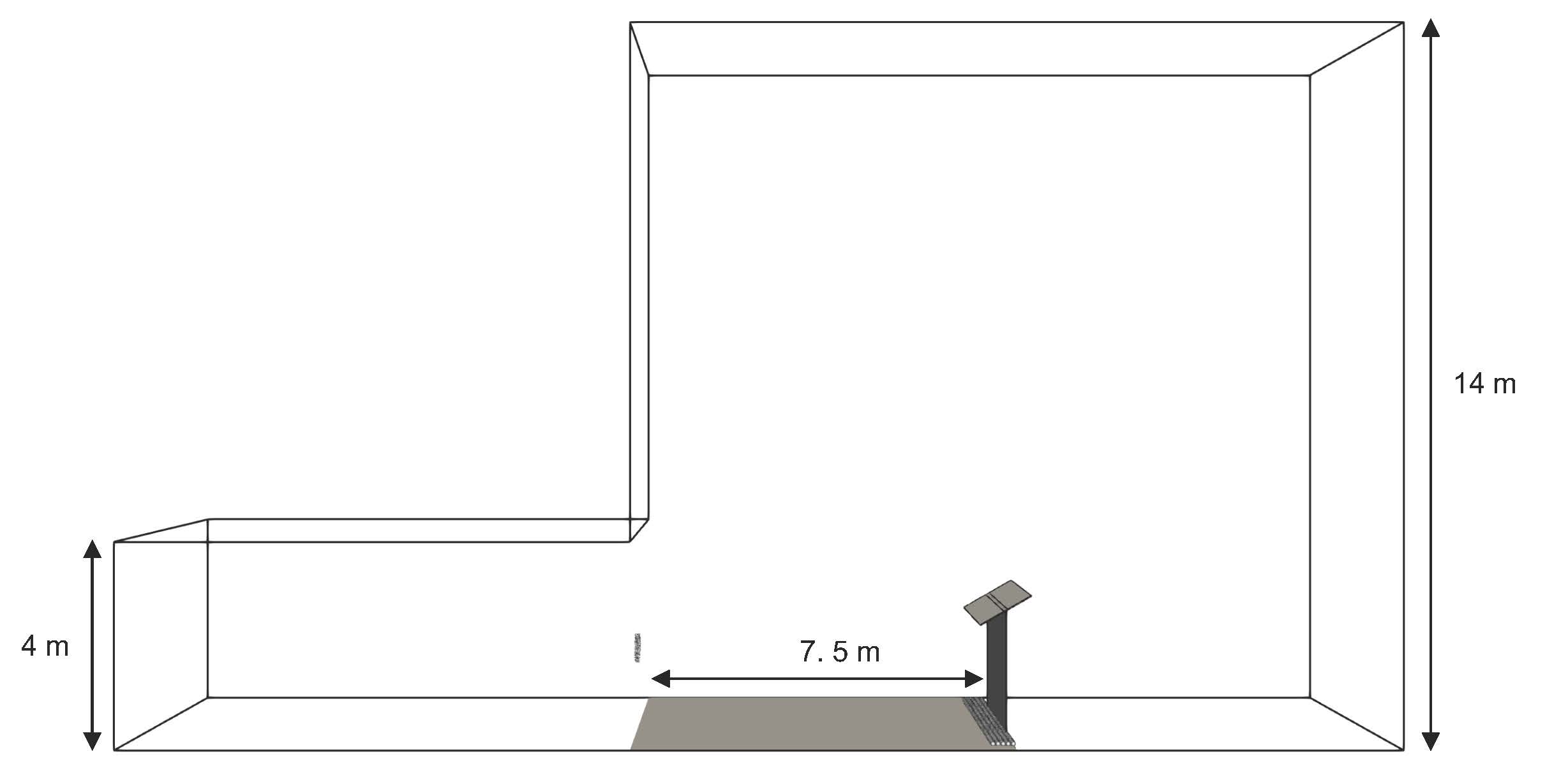
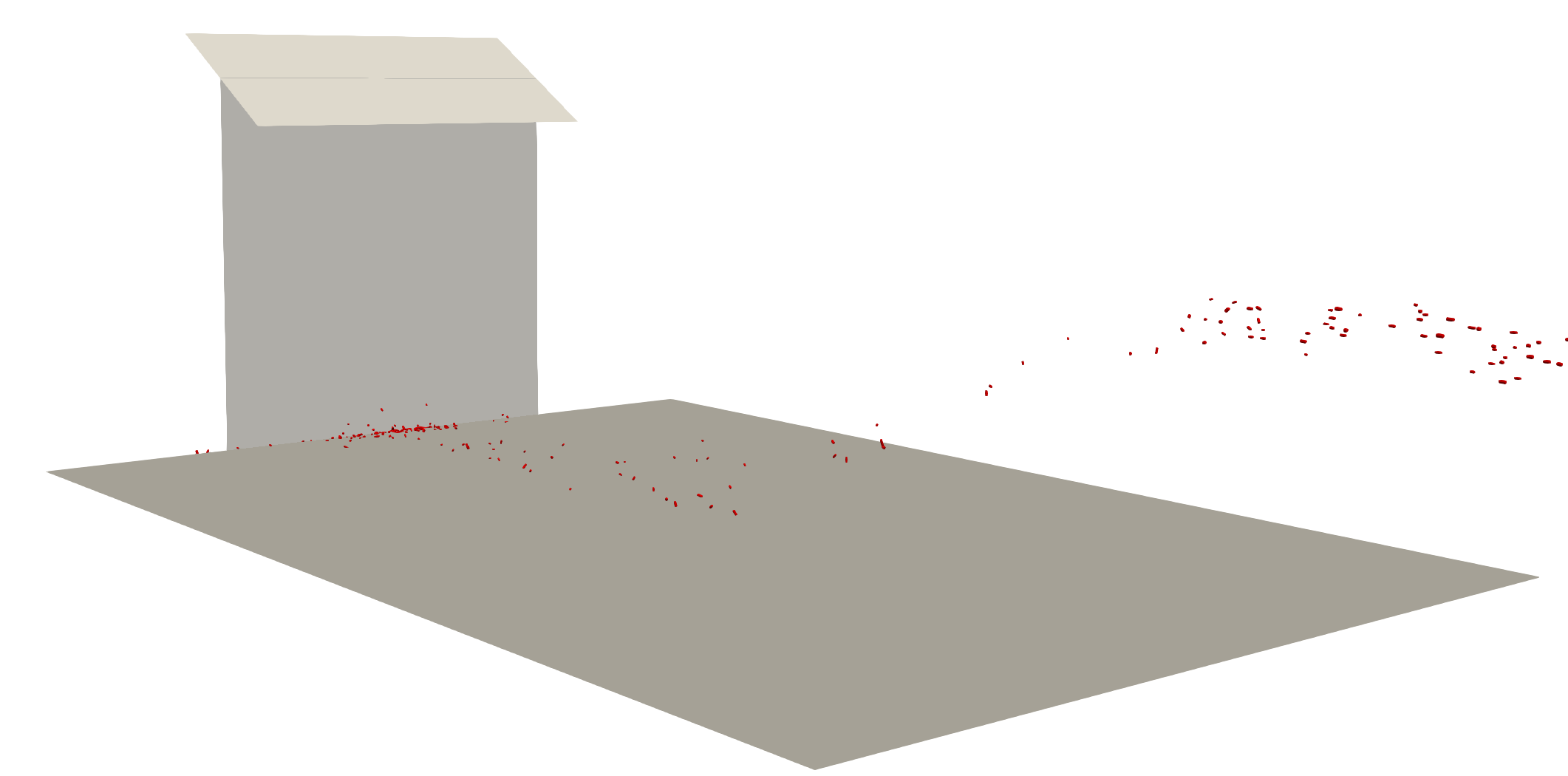
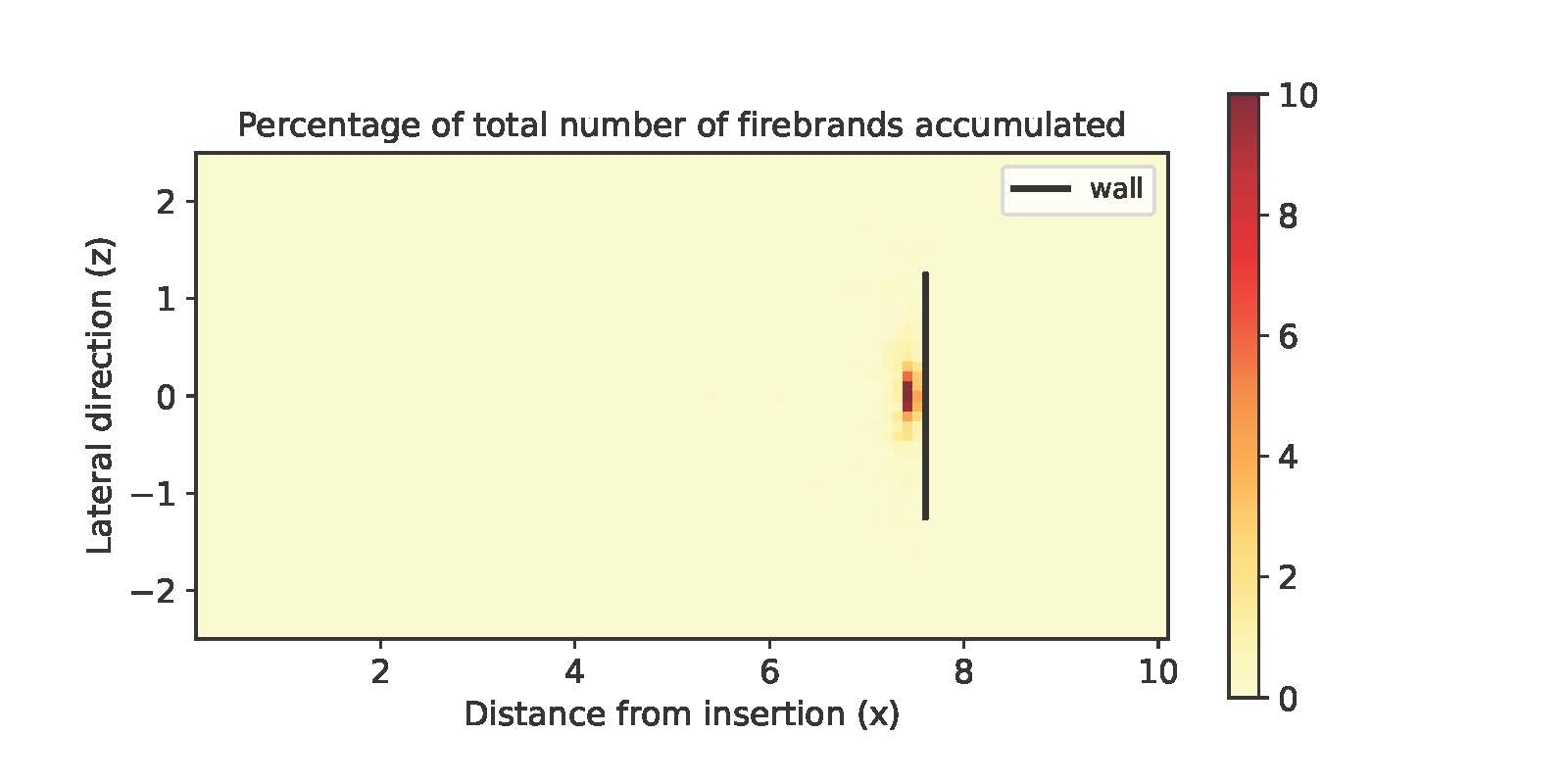
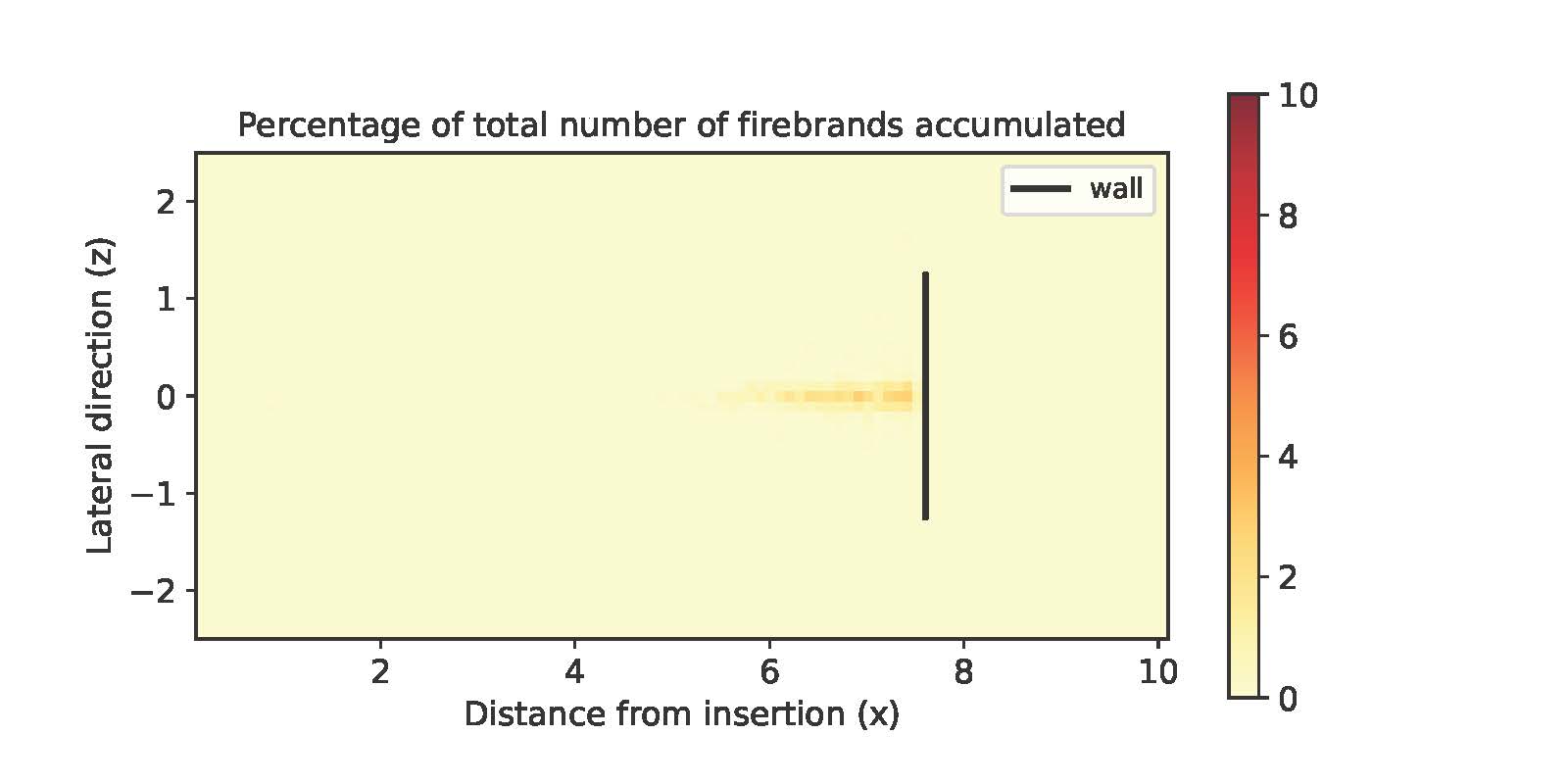
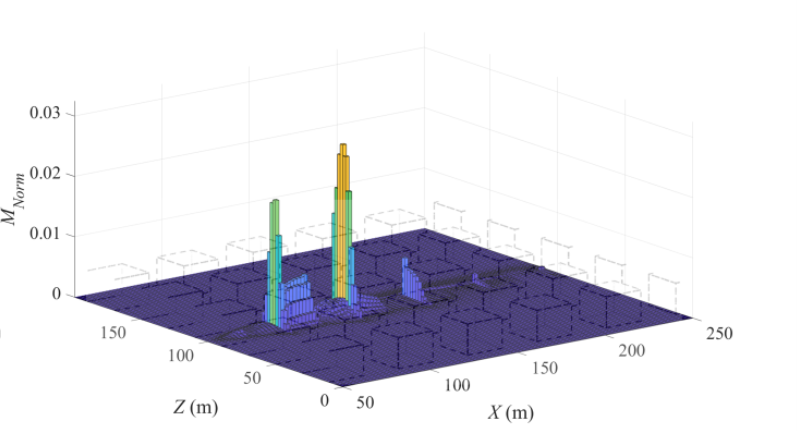
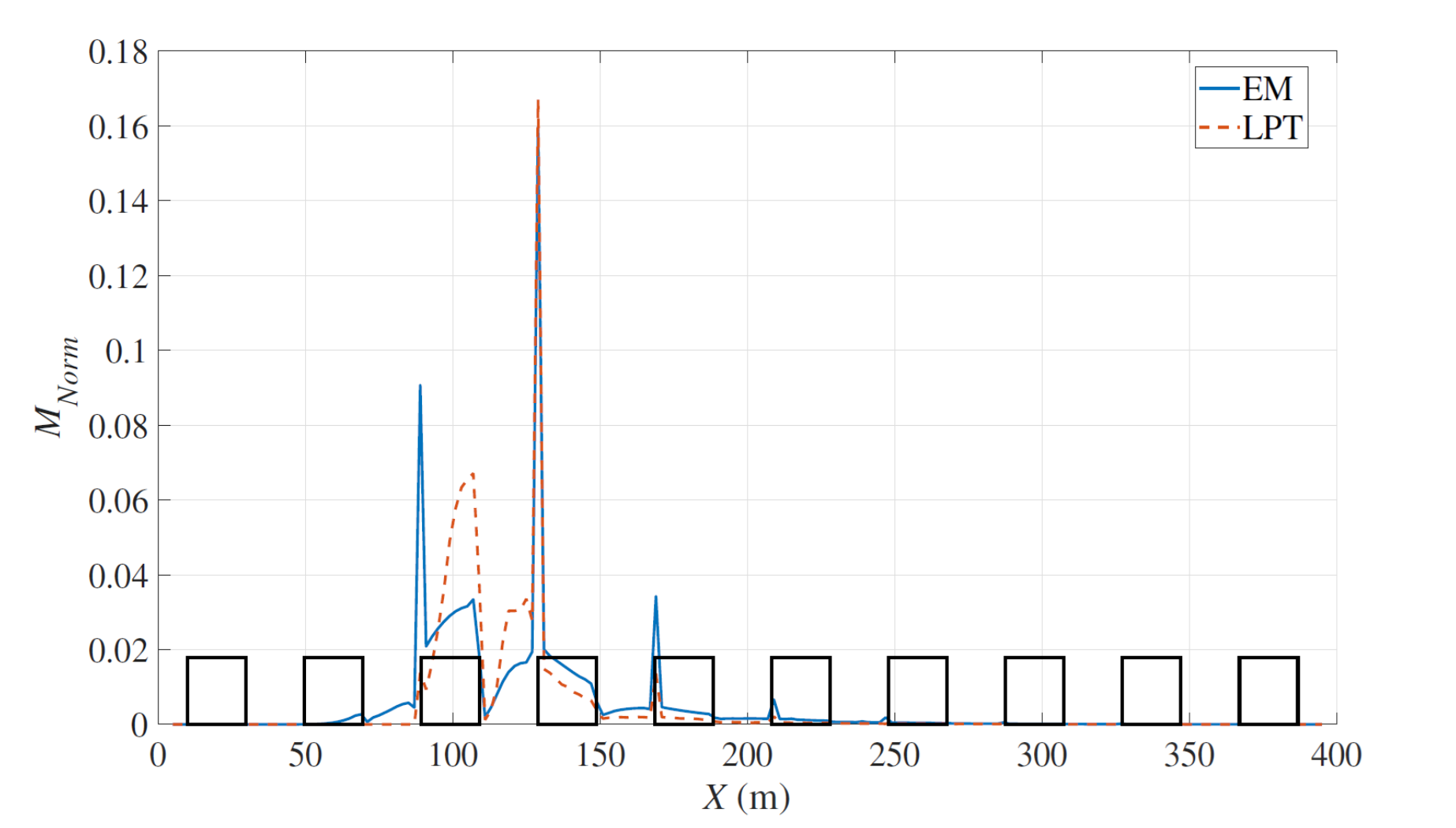
The EM model shown below aims to overcome computational limitations of models that use Lagrangian particle tracking (LPT) by simulating particles of varying size as “phases” within the CFD environment. The EM model makes the simulation of large domains computationally feasible. The EM model has been verified against an LPT model for the domain shown. It offers significant computational savings when the number of particles exceeds 2.65 x 10⁴.
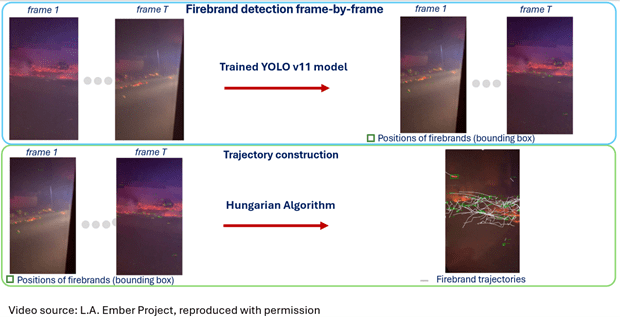
Funded by a NSF RAPID grant, we have gathered videos of the 2025 Palisades and Eaton fires and are using machine learning to analyze the trajectory of firebrands in an urban environment. The challenge is that the videos are of variable quality, many of which were recorded by handheld cell phones and contain a lot of movement. While the videos are still being processed, the research shows a promising path forward for understanding WUI fires.
Structural Fire Engineering
Using finite element analysis (FEA), I have studied structural response under fire conditions, including exploring the topic of fire-induced progressive collapse in steel structures and simulating composite floor systems under traveling fire. More recently, we have come up with our own approach to model traveling fires in CFD using a transient flux-time product for ignition.

Finite Elements+
My group has done extensive work in the formulation and application of finite element analysis and isogeometric analysis for various solid heat transfer and solid/structural mechanics applications. Some examples of our contributions are given below.
Finite element formulations
- Fiber heat transfer element for modeling 3D conduction in beams/columns
- Shell heat transfer elements for modeling 3D conduction in slabs and thin-walled structures
- Thermo-mechanical shell element for modeling coupled thermomechanical behaviors in nonuniformly heated structures
Isogeometric Analysis (IGA)
- IGA of laminated composites and functionally graded materials
- Adaptive IGA to capture spread of plasticity in frames
- Geometrically exact IGA Kirchhoff plate
- Local refinement techniques
Related Algorithms
- Modified arc-length algorithm for modeling thermal snap-through instabilities
- Time-averaged subcycling algorithm for bridging differences in time scale between fast- and slow-physics models, e.g., fire dynamics and solid heat transfer
Publications
You can view a complete list of publications on my CV. The following is a selection of relevant papers:
- Martinez, J., and Jeffers, A.E. (2022). “Tension Stiffening Model for the Finite Element Analysis of Composite Floor Systems Exposed to Fire,” Journal of Structural Fire Engineering, to appear.
- Martinez, J., and Jeffers, A.E. (2021). “Structural Response of Steel-Concrete Composite Floor Systems under Traveling Fires,” Journal of Constructional Steel Research, 186, 106926.
- Martinez, J., and Jeffers, A.E. (2021). “Analysis of Restrained Composite Beams Exposed to Fire,” Engineering Structures, 234, 111740.
- Liu, N., and Jeffers, A.E. (2019). “Feature-preserving rational Bézier triangles for isogeometric analysis of higher-order gradient damage models,” Computer Methods in Applied Mechanics and Engineering, 357, 112585.
- Beata, P., Jeffers, A.E., and Kamat, V.K.R. (2018). “Real-Time Fire Monitoring and Visualization for the Post-Ignition Fire State in a Building,” Fire Technology, 54, 995-1027.
- Liu, N., and Jeffers, A.E. (2018). “A Geometrically Exact Isogeometric Kirchhoff Plate: Feature-Preserving Automatic Meshing and C1 Rational Triangular Bézier Spline Discretizations,” International Journal of Numerical Methods in Engineering, 115, 395-409.
- Liu, N., and Jeffers, A.E. (2017). “Isogeometric Analysis of Laminated Composite and Functionally Graded Sandwich Plates Based on a Layerwise Displacement Theory,” Composite Structures, 176, 143-153.
- Nguyen, H., Jeffers, A.E., and Kodur, V. (2016). “Computational Simulation of Steel Moment Frame to Resist Progressive Collapse in Fire,” Journal of Structural Fire Engineering, 7, 286-305.
- Guo, Q., and Jeffers, A.E. (2014). “Finite Element Reliability Analysis of Structures Subjected to Fire,” Journal of Structural Engineering, DOI: 10.1061/(ASCE)ST.1943-541X.0001082.
- Jeffers, A.E., and Beata, P.A. (2014). “Generalized Shell Heat Transfer Element for Modeling the Thermal Response of Non-Uniformly Heated Structures,” Finite Elements in Analysis and Design, 83, 58-67.
- Jeffers, A.E. (2013). “Heat Transfer Element for Modeling the Thermal Response of Non-Uniformly Heated Plates,” Finite Elements in Analysis and Design, 63, 62-68.
- Guo, Q., Shi, K., Jia, Z., and Jeffers, A.E. (2013). “Probabilistic Evaluation of Structural Fire Resistance,” Special Issue: World Trade Center, Fire Technology, 49, 793-811. Recipient of the 2013 Harry C. Bigglestone Award.
In addition to journal and conference papers, I was a contributing author to the following two books on fire safety engineering:
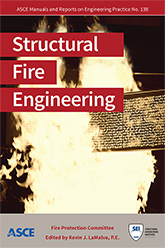

 A. E. Jeffers